Genoa is not a city you visit, it is a city you walk through. Its old town is one of the largest in Europe, a maze of narrow alleys (the caruggi) climbing up and down between the sea and the hills. One day is not enough to see everything, but it is enough to see what matters: the port the ships sailed from, the squares where deals were struck, the cathedral, the Doge's Palace and the bankers' street.
This itinerary follows the same order as our tour Genova Essenziale: it starts by the sea and climbs towards the city of palaces.
Morning: starting from the sea
1. The Old Port
The starting point is the harbour, redesigned by Renzo Piano for the 1992 Expo. Here you take in the whole city at a glance: the sea in front, the houses climbing behind you. Before leaving, look at Palazzo San Giorgio and its frescoed façade: for centuries it was the financial heart of the Republic.
2. Piazza Banchi and Sottoripa
A few steps on is the square where money was changed and deals were closed: its name comes from the money changers' benches (banchi). Under the medieval arcades of Sottoripa you will find fry shops and bakeries: the perfect moment for a slice of focaccia, the real one, oily and salty.
3. San Lorenzo Cathedral
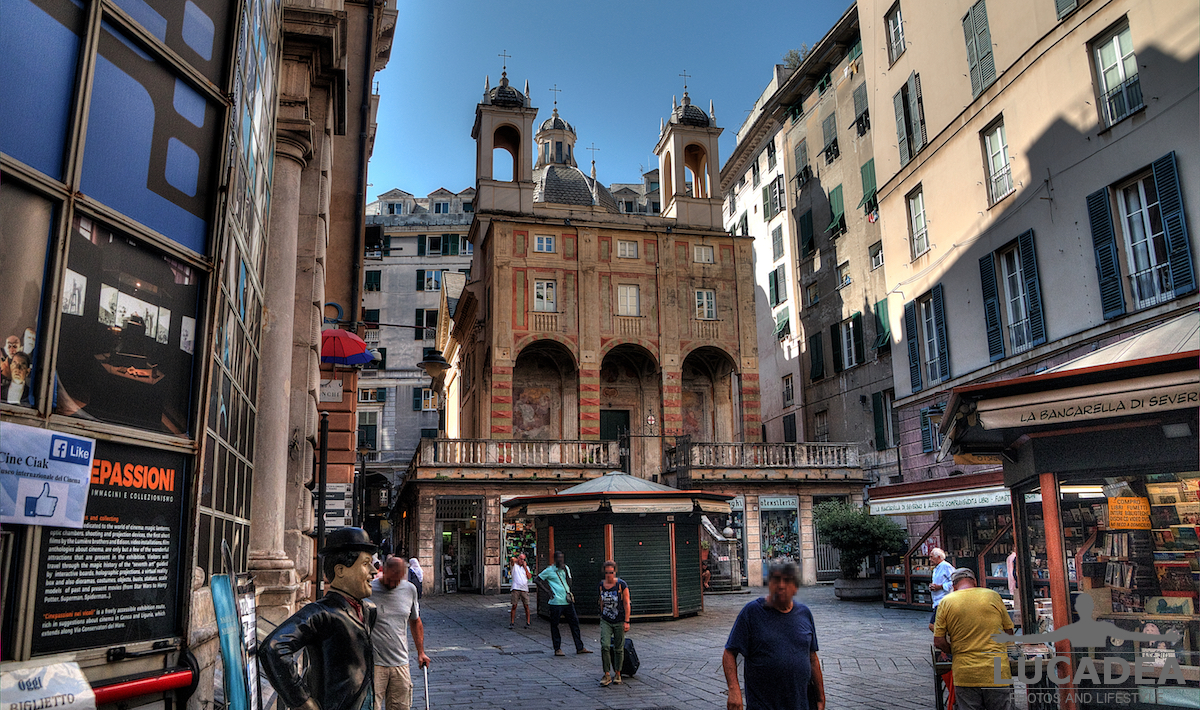
The black-and-white striped façade is the signature of medieval Genoa. Inside there is a detail few people notice: on 9 February 1941 a shell fired from a British warship pierced the roof and landed in the nave without exploding. A copy is on display in the right-hand aisle, next to a stone plaque recalling the narrow escape.
Midday: power and the piazza
4. The Doge's Palace and Piazza De Ferrari
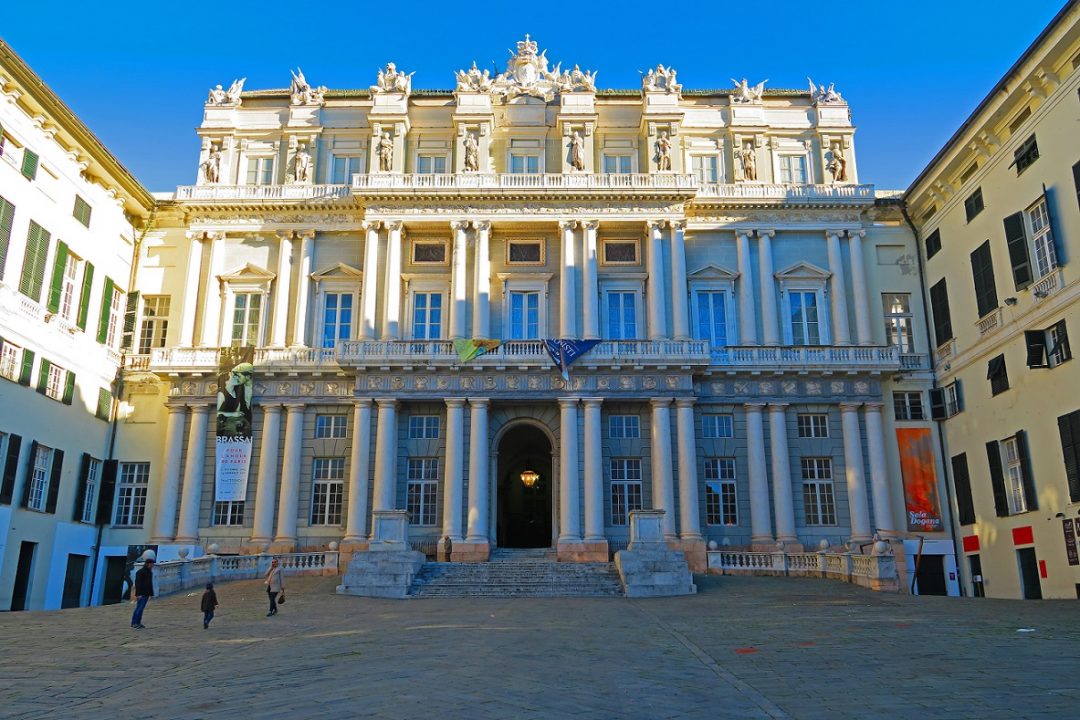
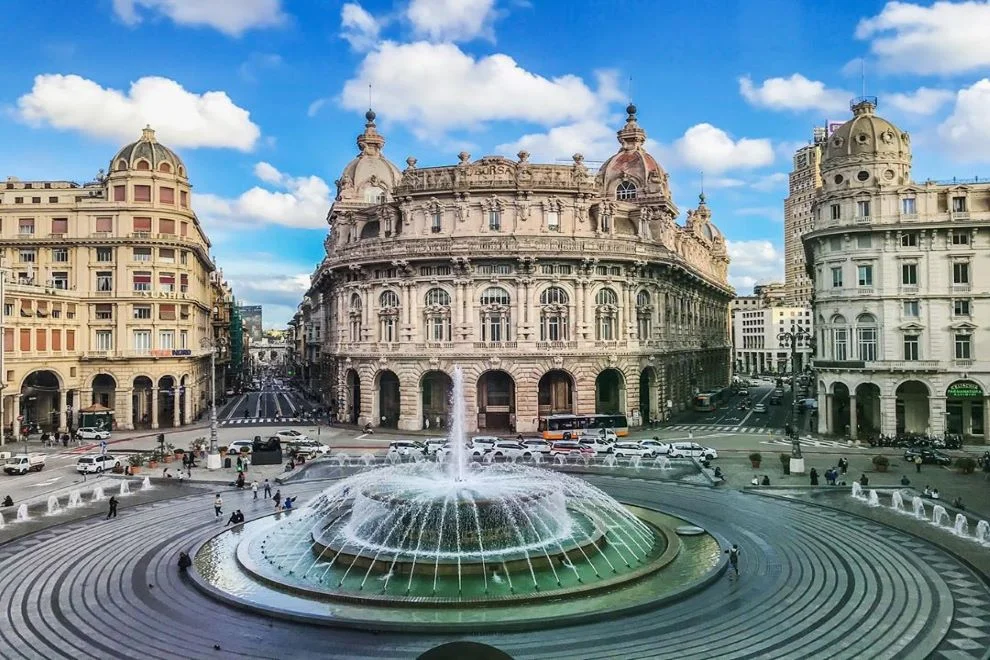
Palazzo Ducale was the residence of the Doges; today it hosts exhibitions and has a courtyard you can walk through freely. On the other side you reach Piazza De Ferrari and its great fountain: the city's meeting point and the exact centre of your day.
Afternoon: into the caruggi
5. Piazza Campetto and the alleys
From De Ferrari, head down into the caruggi. There is only one rule here: look up. Slate doorways, small shrines on street corners, noble palaces hidden in alleys two metres wide. Piazza Campetto, small and full of shops, is the link to the most elegant part of the city.
6. Via Garibaldi and the Palazzi dei Rolli
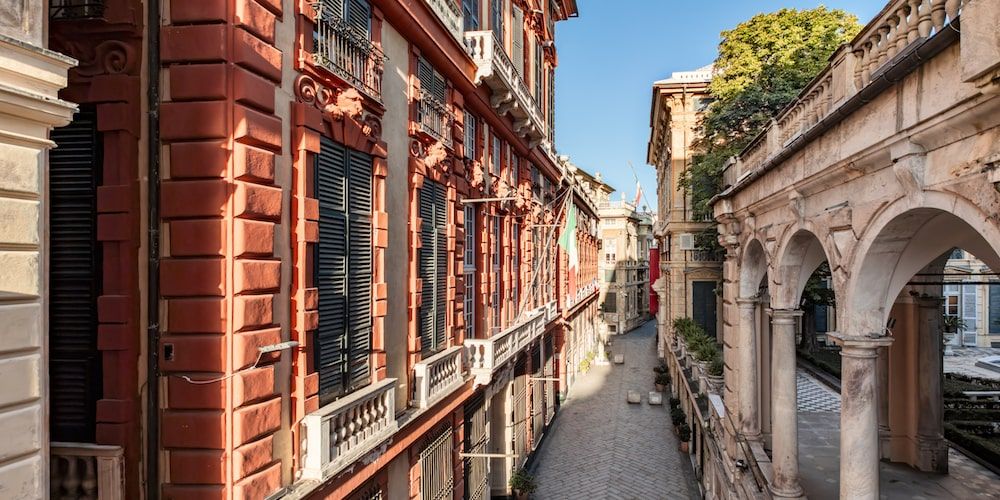
Via Garibaldi, the "Strada Nuova", is the finish line: a single street of palaces built by the richest families of the Republic. Since 2006 it has been a UNESCO World Heritage Site together with the Palazzi dei Rolli, the private residences that had to host kings and ambassadors on official visits. Three of these palaces, Palazzo Rosso, Palazzo Bianco and Palazzo Tursi, are now the Strada Nuova Museums.
At sunset: Genoa from above
From Piazza Portello, a stone's throw from Via Garibaldi, an Art Nouveau lift built in 1910 climbs to the Spianata di Castelletto. In one minute you are above the slate roofs with the whole port in front of you: the best way to end the day and see the route you walked from above.
Practical tips
- Comfortable shoes: the old town is hilly and the caruggi are paved with stone.
- Start early: the alleys are quieter and the light on the port is at its best.
- Museums and churches: check opening hours before you go, they change with the seasons.
- Headphones: if you follow an audio guide, you listen without having to read your phone.
Frequently asked questions
Is one day enough to visit Genoa?
For the old town, yes, if you follow a route. For the seaside districts such as Boccadasse or Nervi you need at least a second day.
Can you see Genoa on foot?
Yes: from the Old Port to Via Garibaldi it is about 1.7 km. To reach Castelletto there is the public lift from Piazza Portello.
Do you need a guide?
It is not essential. With an audio guide on your phone you go at your own pace, with no fixed times.
Walk it with Genoa Essential · 7.90 €